Showing posts with label food. Show all posts

Monday, February 28, 2011

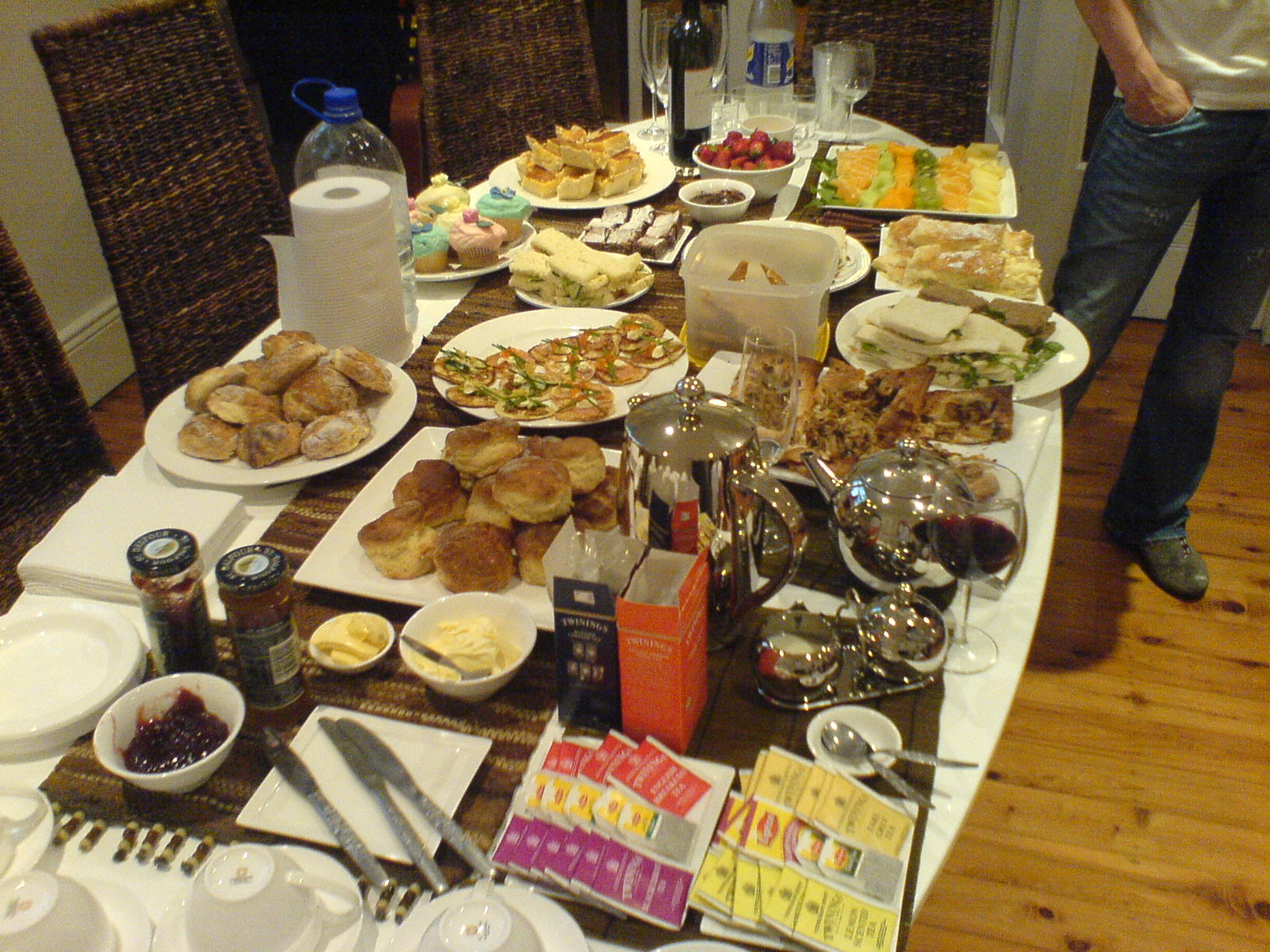
Smörgåsbord


Smörgåsbord (Swedish pronunciation: [ˌsmœrɡɔsˈbuːɖ]) is a type of Scandinavian meal served buffet-style with multiple dishes of various foods on a table, originating in Sweden. In Norway it is called koldtbord, in Denmark it is called kolde bord, in Finland seisova pöytä and in Estonia rootsi laud. Smörgåsbord became internationally known as Smorgasbord at the 1939 New York World's Fair when it was offered at the Swedish Pavilion's "Three Crowns Restaurant." It is typically a celebratory meal and guests can help themselves from a range of dishes laid out for their choice. In a restaurant, the term refers to a buffet-style table laid out with many small dishes from which, for a fixed amount of money, one is allowed to choose as many as one wishes.


Read more...

Monday, February 21, 2011

Frikadeller, aka Frikadella


Frikadeller are flat, pan-fried dumplings of minced meat, often likened to the Danish version of meatballs. They are a popular dish in Denmark, Poland and Germany. In Sweden, poached quenelles are called frikadeller and are usually served in soup.

Many variations of frikadeller exist but traditionally they are made of minced pork, veal, or beef; chopped onions; eggs; milk (or water); bread crumbs (or oatmeal or flour); salt; and pepper; then formed into balls and flattened somewhat. They are then pan-fried in pork fat, or more commonly in modern times in butter, margarine or even vegetable oil.


Click here to read more.

At the deli where my bother worked, they would take all of the ends of the slicing meats that were two small to slice more, grind them up, mix in eggs and deep fry them.

Wednesday, September 15, 2010

Jamón ibérico

ham

Jamón ibérico, Iberico ham, also called pata negra, is a type of cured ham produced mostly in Spain and in some Portuguese regions, where it's called presunto ibérico. It is at least 75% black Iberian pig, also called the cerdo negro (black pig). According to Spain's Denominación de Origen rules on food products jamón ibérico may be made from cross-bred pigs as long as they are at least 75% ibérico.

Until recently, jamón ibérico was not available in the United States (a fact referenced in the movie Perdita Durango, where the ham of Jabugo is praised as "illegal, but delicious").

Prior to 2005, only pigs raised and slaughtered outside of Spain were allowed to be processed in Spain for export to the United States. In 2005 the first slaughterhouse in Spain, Embutidos y Jamones Fermín, S.L., was approved by the United States Department of Agriculture to produce ibérico ham products for export to the United States.

The first "jamones ibéricos" were released for sale in the United States in December 2007, with the bellota hams due to follow in July 2008. The basic jamón ibérico is priced upwards of $52 a pound, and the bellota is priced upwards of $96 a pound, making these hams some of the most expensive in the world.


More...

Friday, April 4, 2008

National Pigs-in-a-Blanket Day is celebrated on April 24!

food

from wikipedia:

In the United States, the term "pigs in a blanket" often refers to hot dogs, Vienna sausages, or breakfast/link sausages wrapped in biscuit dough, pancake, or crescent-roll dough, and baked. A common variation is to slit the hot dog or sausage and stuff it with cheese before wrapping in dough. The dough is sometimes homemade, but canned dough is most common.


More...

Monday, March 31, 2008

Caipirinha

Caipirinha

from wikipedia:

Caipirinha (pronounced [kaj.pi.'ɾĩ.jɐ]) is Brazil's national cocktail, made with cachaça (pronounced IPA: [ˌkaˈʃasɐ]), sugar and lime. Cachaça is Brazil's most common distilled alcoholic beverage. Like rum, it is made from sugarcane. Cachaça is made from sugarcane alcohol, obtained from the fermentation of sugarcane juice which is afterwards distilled. Caipiroska, a common variant of the drink, uses vodka in place of cachaça. A Caipirissima substitutes rum for the cachaça.


More...

MP3 file of pronunciation

Monday, March 17, 2008

Parmigiano-Reggiano


Parmigiano-Reggiano is a hard, fat granular cheese, cooked but not pressed, named after the producing areas of Parma, Reggio Emilia, Modena, Bologna, in Emilia-Romagna, and Mantova, in Lombardy, Italy.

Parmigiano is simply the Italian adjective for Parma; the French version, Parmesan, is used in English. The term Parmesan is also loosely used as a common term for cheeses imitating true Parmesan cheese, especially outside Europe; within Europe, the Parmesan name is classified as a protected designation of origin. (more...)

Friday, March 7, 2008

53rd and 6th


53rd and 6th or Chicken and Rice is a popular halal gyros stand on the corner of 53rd street and 6th avenue in New York City. (more...)